Recycling and Sustainability for House Clearance Shepperton
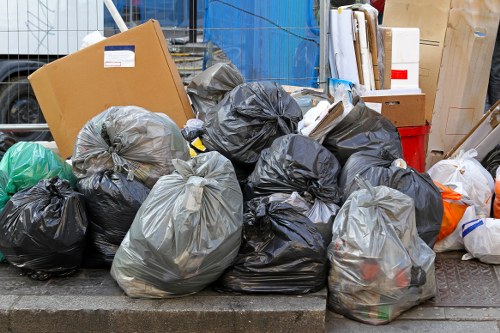 House Clearance Shepperton is committed to leading local waste clearance with an eco-conscious approach. Our Shepperton house clearance services prioritise reuse, recycling and responsible disposal across every job. We recognise that a sustainable rubbish area isn’t just a policy — it’s an operational discipline that affects the whole community in Spelthorne and neighbouring boroughs. By combining careful sorting on site, partnerships with local re-use charities and modern, low-emission transport, our clearance Shepperton teams turn household disposal into a circular, low-carbon process.
We set clear, measurable goals so customers understand our environmental commitments. Our current recycling percentage target is to divert 80% of recoverable materials from landfill for standard domestic clearances by the end of 2028. That figure includes items reclaimed for direct reuse, materials sent to materials recovery facilities (MRFs) and goods donated to charities. This target is reviewed annually and benchmarked against Surrey County Council and Spelthorne Borough recycling performance. Transparency is important: we track and report recovery rates per job and use that data to refine sorting methods and logistical choices.
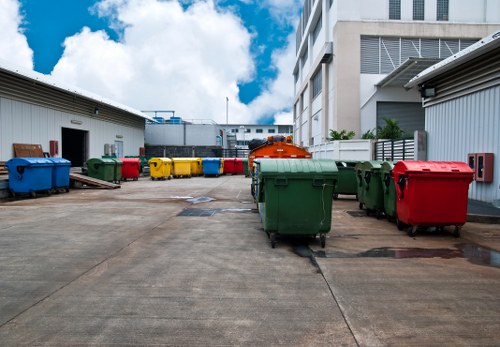
 Part of achieving a high recycling rate is efficient processing at local transfer stations and authorised facilities. We work with Surrey County Council-approved waste transfer stations and nearby MRFs to ensure sorted materials—paper and card, mixed recyclables, glass, metals and green waste—are handled correctly. When items are unsuitable for standard facilities, we route them to specialist centres for safe treatment. For hazardous or controlled wastes (paints, solvents, electronics with batteries), we use licensed hazardous waste sites so nothing is inappropriately dumped or causes contamination.
Partnerships with charities are central to our reuse-first philosophy. We collaborate with national and local organisations to rehome furniture, electricals and household goods that are in good condition. Typical partners include non-profit furniture rehoming groups and local helplines that support families moving into new homes. Our charity partnerships include coordinated collections and direct drop-offs to maximise the life of usable items while supporting local social causes. Activities supported by these partnerships include:
- Direct donations of furniture and household goods to rehoming charities
- Refurbishment programmes that prepare items for resale to fund local projects
- Targeted collections for community services and household essentials drives
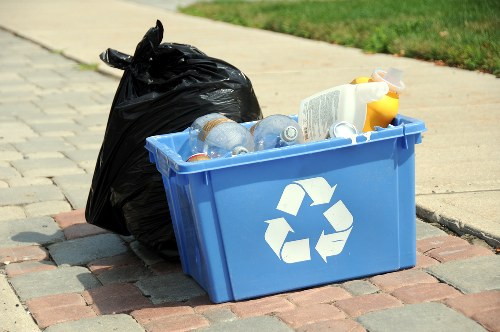 The wider borough approach to waste separation shapes how we operate on the ground. In line with many Spelthorne practices, our teams separate food and garden waste where required, keep glass and mixed recycling streams apart and ensure paper and cardboard are bundled for recycling centres. This attention to the boroughs' separation schemes reduces contamination at MRFs and increases the percentage of materials that can be recycled or reprocessed. We also advise customers on local kerbside rules and how an initial sort before clearance helps raise overall recovery.
Low-carbon vans and sustainable transport for clearance Shepperton
Our fleet strategy is designed to cut emissions from collection and transport. We run a mix of fully electric and low-emission hybrid vans for short urban jobs and efficient Euro 6 diesel vehicles for longer hauls when required. Route planning software reduces mileage and idling, and we prioritise multi-drop collections to avoid empty runs. These choices are part of our carbon management plan: fewer emissions, quieter streets and a genuinely greener house clearance in Shepperton.Creating a sustainable rubbish area also means committing to circular economy principles: repair, reuse and remanufacture where possible. Items that are still functional are diverted from the waste stream and given a second life. Electrical appliances are tested and, where viable and safe, refurbished for reuse; timber and building materials are salvaged for reuse in local projects. For materials that must be processed, we choose partners who recover high-value materials (metals, certain plastics) so the embodied energy in products is preserved rather than lost to landfill.
Monitoring, reporting and continuous improvement
We publish internal reports on recycling performance and set improvement plans for every quarter. For each clearance job our crews log the weight and category of materials: items donated to charities, recycled at MRFs, composted as green waste and materials sent to specialist processors. This operational data enables us to measure progress toward our 80% recycling target, identify frequent contamination sources and update on-site sorting procedures. Over time, customers see the environmental benefit of a structured, accountable Shepperton house clearance service.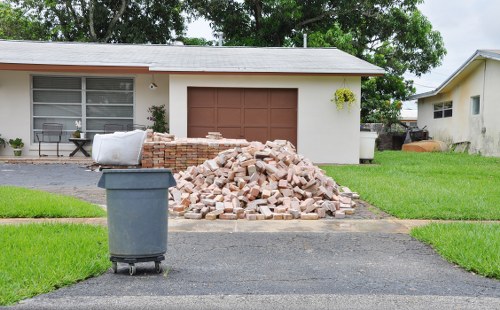 Our ongoing commitments include training crews in sustainable handling, expanding charity partnerships across Surrey and investing in more electric vehicles as technology and infrastructure improve. We also maintain relationships with local transfer stations and recycling outlets so that every item recovered has a clear, responsible destination. By choosing a trusted provider of house clearances Shepperton who prioritises sustainability, residents and landlords can be confident the job will be done with minimal environmental impact and maximum social value.
Final note: sustainable house clearance is a team effort. From the first sort at the property to the final drop-off at a transfer station or charity, our Shepperton clearance services aim to create an eco-friendly waste disposal area in every street we serve. We continue to refine methods, report on outcomes and invest in low-carbon solutions so that waste from clearances becomes a resource rather than a burden.
